
A Little About Us
 Wade Forster is a highly skilled craftsman known for his exquisite work with live edge wood. He has a passion for showcasing the natural beauty of each piece of wood as he transforms raw materials into stunning works of art that will last a lifetime.
As a journeyman carpenter of over two decades, Wade no stranger to the complexities and challenges of his craft. Each slab of wood is carefully selected to create one of a kind pieces, including tables, benches, desks, shelves and smaller decor items. Each client is as unique as their project, Wade understands this and will keep communication open during the entire building process to ensure the result is perfect for them.
Prioritizing sustainability and eco-friendliness, Wade sources his wood locally and uses natural finishing products on each piece. This ensures that each project is not only visually stunning but environmentally conscious.
Wade lives with his wife and children in central Manitoba. He is deeply involved in the community, coaching many different sports teams. With a deep respect for the people and materials he works with, Wade continues to push the boundaries of live edge wood craftsmanship, creating timeless pieces that bring the beauty of nature into the heart of every home.
Wood History
One of the first questions I usually get from my clients is "where do I get my wood from?"
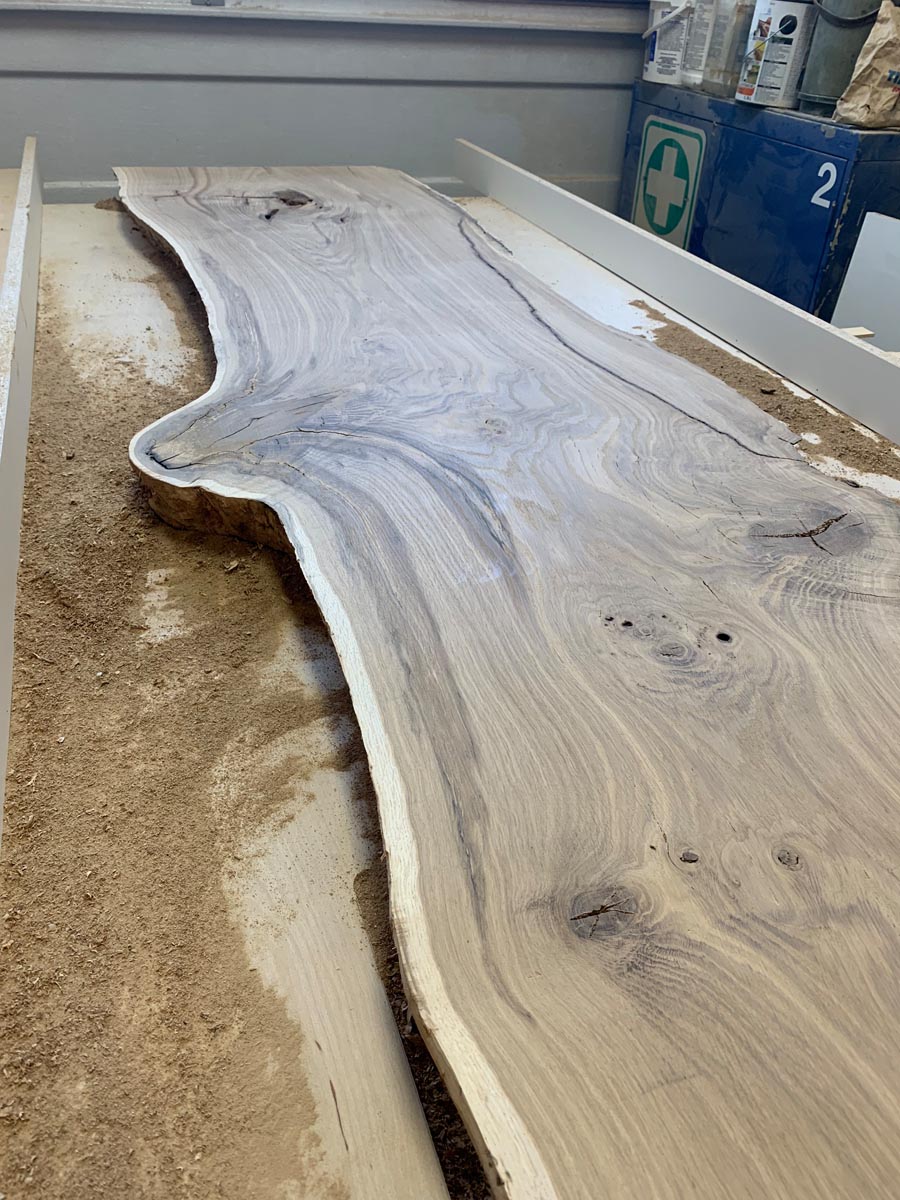
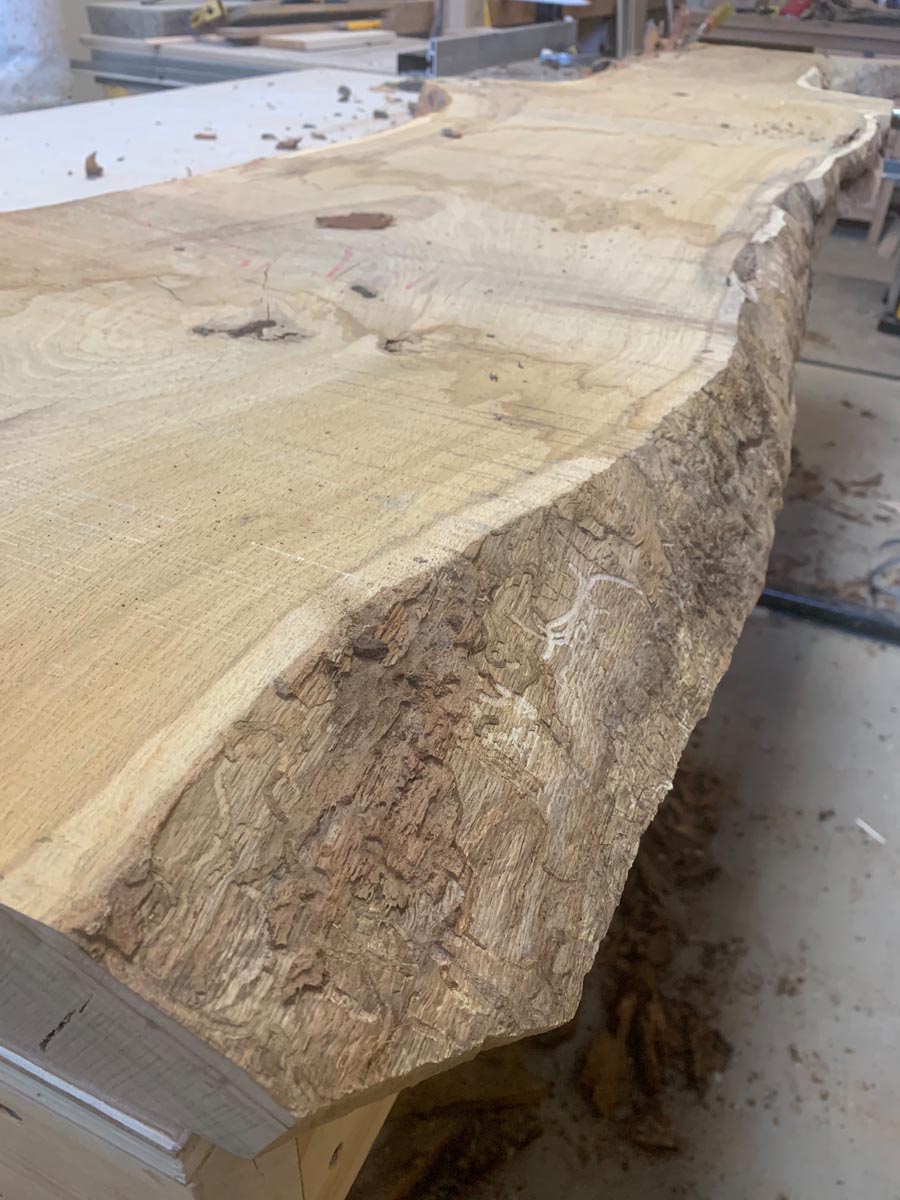
I try to keep things local, so most of my Ash, Oak, and Elm, come from a small sawmill in southern Manitoba by the Rat River. Each piece is harvested from standing dead trees and transported to the mill, where it sits, air drying for up to 3 yrs. It is then cut into slabs or timbers. I personally hand pick each slab from the mill to ensure I get exactly what I need for each project.
My other woods, such as large slabs of Old Fir or Black Walnut, come from BC and Ontario. Lastly my dimensional lumber 8/4 or 2” material comes from a local wood distributor in Winnipeg.
Build Process
All of my wood gets stored in my shop before they get turned into pieces of furniture or art. Almost all of the slabs are rough sawn with bark still on.
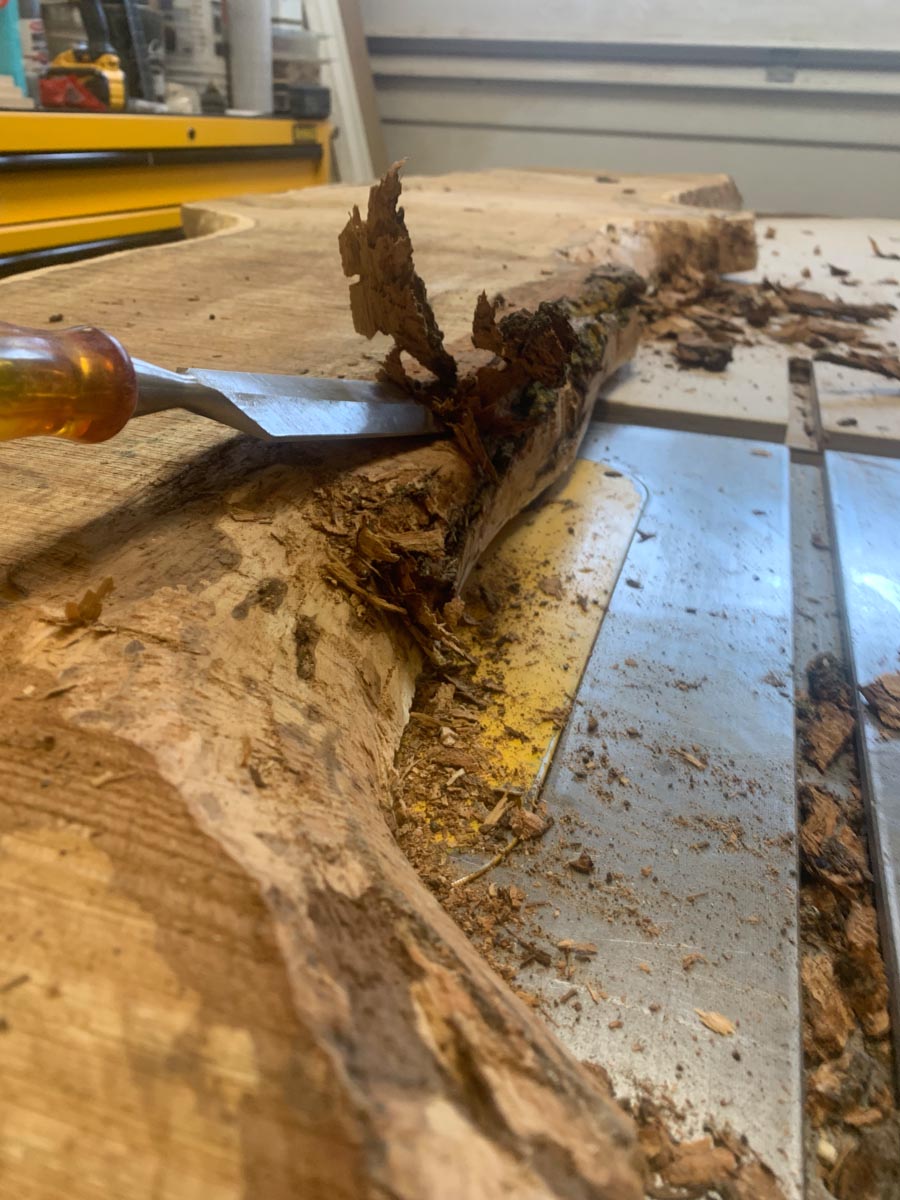
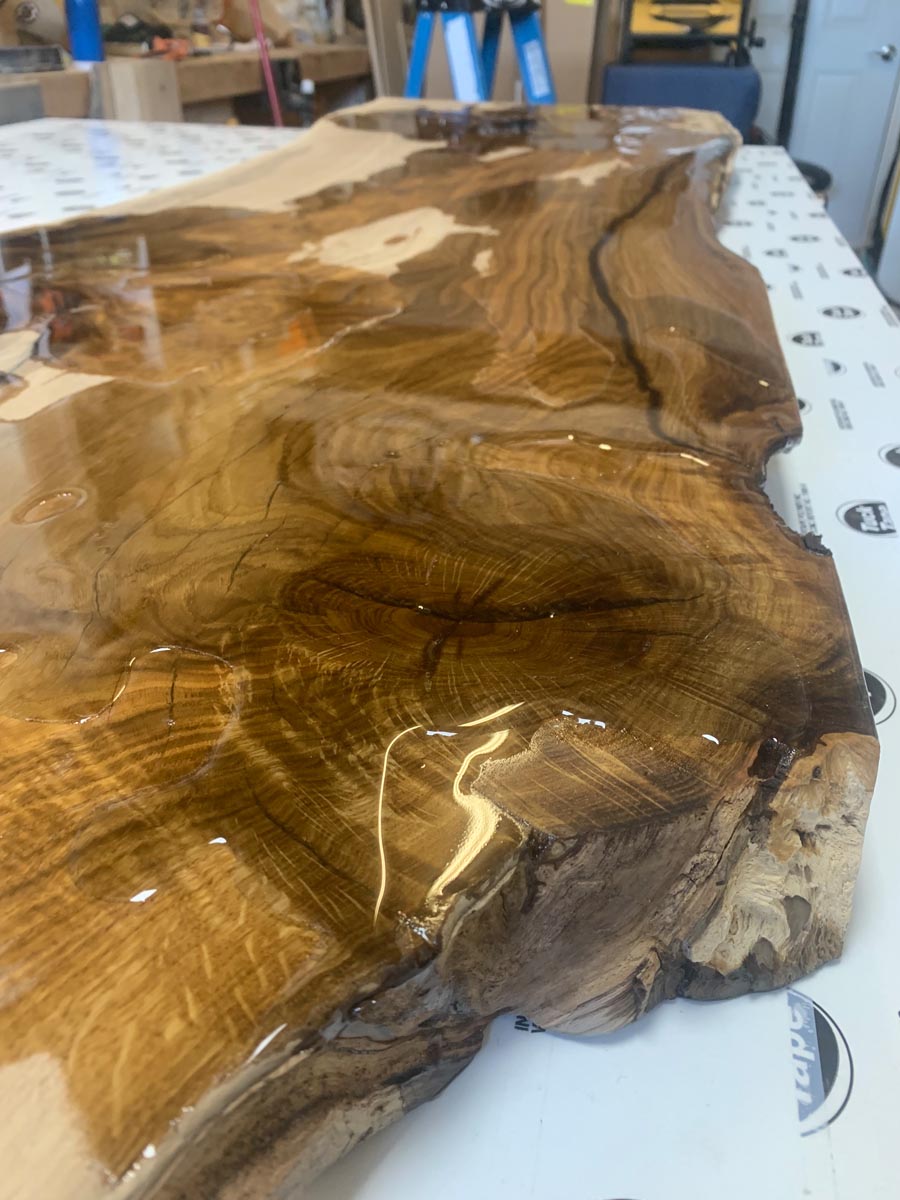
First I strip all the bark off for one main reason to ensure that their are no foreign species lurking in the wood prior to being initially planed down to take out warps, twists, or general imperfections. Once that process is complete, I aim to stabilize large splits or cracks with bow ties or epoxy. I also use epoxy for client requested rivers, knot holes, cuts, other imperfections, etc. Before the build process actually starts I do a final plane of the wood to ensure a smooth, clean work surface.
I cut, shape, and attach all the necessary pieces to create each project. The second last step, and arguably one of the most important process, is the movement mitigation phase. This is where I router in cold rolled steel channels and attach them to the underside of the piece to minimize any future movement. As solid wood, being natural, will move depending on atmospheric changes to humidity and temperature in its space.
The final process is sanding and finishing. I usually sand from 100 grit up to 150 grit which provides natural oils or waxes good penetration into the wood fibres. The oils and waxes that I usually use are Walrus Oil, Odies Oil, Rubio Monocoat oil, Osmo Oil, and Beeswax. However if client requests a specific stain or finish, I will have the piece professionally stained and finished with multiple coats of a water resistant durable lacquer.
Let's Build Something
Do you have a project in mind? Are you interested in learning more? Or do you just have a question? Fill in the form below to send us over a message. We're always happy to hear from you!